Contact Us

Briefs and reports to inform gambling harms policy and prevention in Canada
Submission To The House Of Commons Standing Committee On Canadian Heritage: An Evidence Brief on Sports Betting Advertising
"Bill S-211 is an opportunity to put public health at the centre of how Canada responds to gambling advertising. A coordinated national framework could strengthen protections for children and youth while helping governments respond to a gambling environment that increasingly crosses provincial and territorial boundaries."
Matthew M. Young, PhD, Chief Research Officer, Greo Evidence Insights, and Senior Research Associate, CCSA
The submission brings together perspectives from research, public health, gambling harms prevention, and the non-profit sector. It underscores that sports betting advertising is not solely a matter of commercial promotion, but also an issue with implications for public health and social well-being.
Endorsing organizations include the Canadian Mental Health Association, the Canadian Paediatric Society, the Canadian Public Health Association, the Centre for Addiction and Mental Health, the Centre for Gambling Research at UBC, the Canadian Society for Addiction Medicine, and Mental Health Research Canada.
These organizations are urging members of the Standing Committee on Canadian Heritage to support the bill and its objective of advancing a national framework on sports betting advertising.
Online gambling among young Canadian adults: A call to action
This report analyzes data collected from more than 8,000 people in Canada regarding their gambling activities. The data was collected in 2024 by Mental Health Research Canada as part of a broader online survey of mental health, and was analyzed in collaboration with Greo Evidence Insights. The findings indicate that nearly one in four (23.5%) young adults, aged 18 to 29, who reported gambling online in the past year experienced high levels of gambling-related harms, including financial, emotional, psychological, and relationship harms. The report calls for a pan-Canadian strategy to address rising online gambling harms, including among young people.
Gambling availability and advertising in Canada: A call to action
- Increased gambling participation, which has been associated with increased gambling-related harms
- The type of gambling being made available and promoted is associated with greater risk of harm
- The volume of gambling advertisements, which repeatedly pair sports with betting, “normalizes” gambling
- Many Canadians are more vulnerable to problematic gambling and gambling-related harms because of the impacts of COVID-19 and a rise in the cost of living

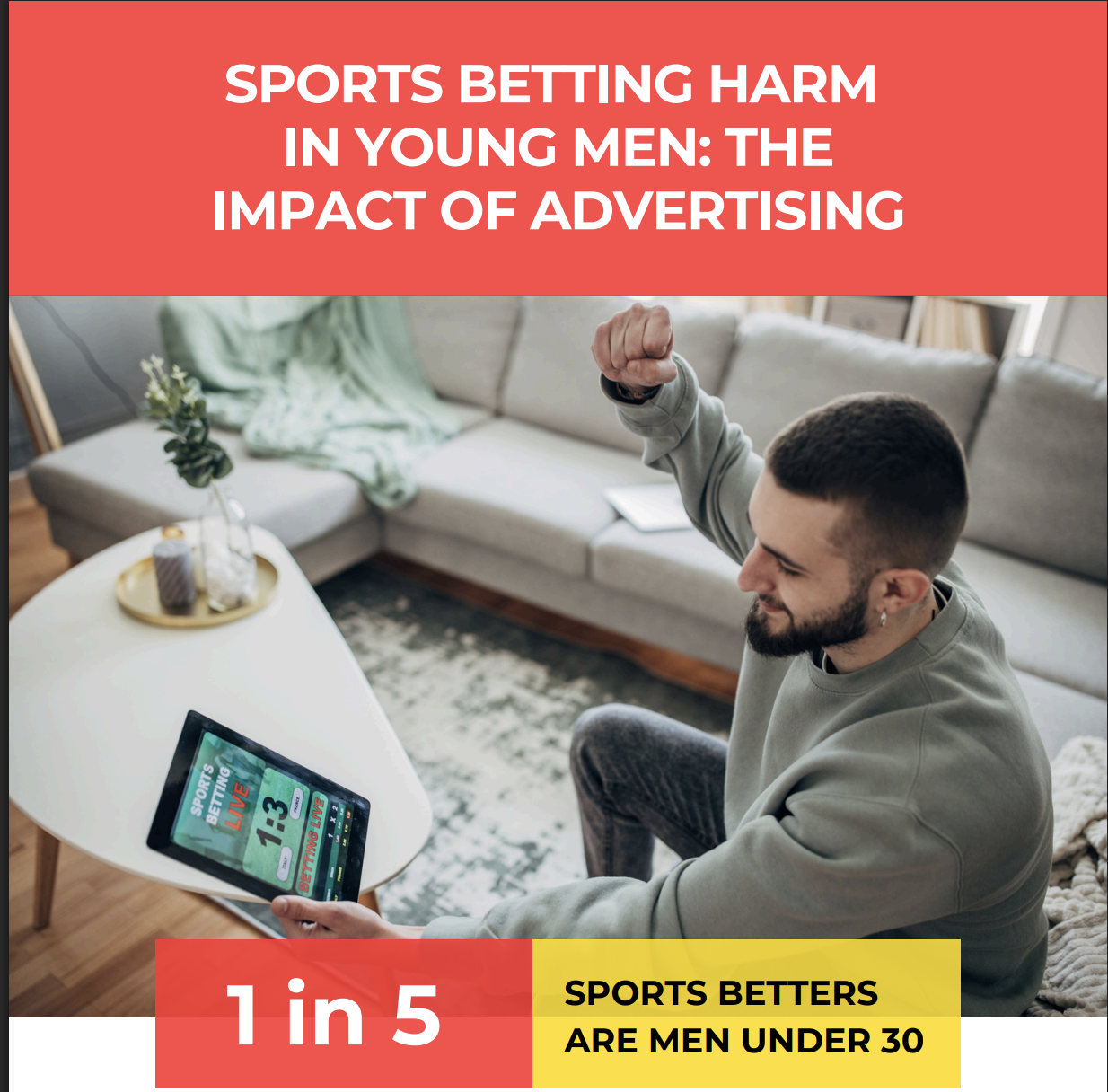
New research on sports betting advertising linked to negative impacts on young men